Grain vs. Grain Free Dog Food: What To Choose?
One of the first questions dog owners ask is, “Is this kibble good for my dog?” And the next question is often, “Should I choose grain free dog food or food with grains?”
I’ve received so many questions about this topic that I decided to write an article explaining what’s really behind the grain-free trend and why I don’t believe grain-free automatically means healthier.
How Did the Grain Free Dog Food Trend Start?
For decades, the pet food industry has been using inexpensive ingredients like corn, wheat, soy, and other plant-based ingredients in commercial dog food.
Then, around 2005, the grain-free dog food trend started gaining popularity. The idea sounded great: remove grains and offer dogs something healthier, with more meat and fewer fillers.
But here’s my question: What did manufacturers replace those grains with? More meat? 🥩
Unfortunately, in many cases, NO!
Instead of increasing animal protein, many manufacturers simply replaced grains with other inexpensive plant ingredients, including:
- Peas and pea protein
- Lentils
- Chickpeas
- Potatoes and sweet potatoes
So, what exactly improved? We removed one group of plant ingredients and replaced it with another!
Let’s Look at Some Popular Grain Free Dog Foods
To illustrate my point, I looked at three grain-free dog foods featured among the recommendations in a Forbes article.
And surprise, surprise! Look at what’s among their first ingredients!
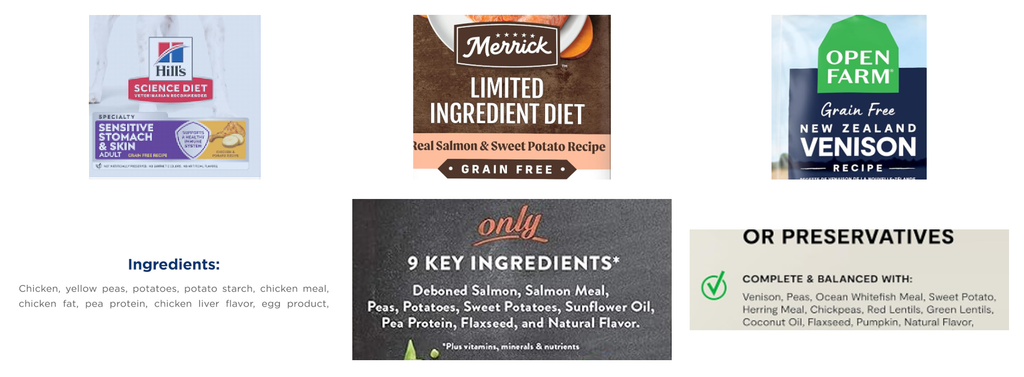
1. Hill’s Science Diet Sensitive Stomach & Skin Grain Free
Chicken is the first ingredient, followed by yellow peas, potatoes, potato starch, chicken meal, chicken fat, and pea protein.
2. Merrick Limited Ingredient Diet – Real Salmon & Sweet Potato
Deboned salmon and salmon meal are followed by peas, potatoes, sweet potatoes, and pea protein.
3. Open Farm Grain Free – New Zealand Venison
The ingredients include venison, peas, ocean whitefish meal, sweet potato, herring meal, chickpeas, and red lentils.
Notice something? All three contain peas, and some also contain concentrated pea protein!
Why replace grains with these ingredients instead of simply adding more meat?
Plant ingredients can be less expensive than animal ingredients, contribute protein, and help manufacturers produce kibble.
And that’s exactly my concern with the grain-free trend.
More Protein Doesn’t Always Mean More Meat!
Here’s something many dog owners don’t realize.
When you see a high protein percentage on a dog food package, you might assume that protein comes from meat.
But the protein percentage includes both animal and plant proteins.
Pea protein, for example, contributes to the total protein percentage shown on the label, even though it doesn’t provide the same amino acid profile as meat, fish, or eggs.
That means a grain-free dog food advertised as high-protein doesn’t necessarily contain more animal protein than a grain-inclusive food.
A high protein percentage doesn’t tell you how much of that protein actually comes from meat!
And for me, that’s an important distinction when choosing dog food.
Grain Free Dog Food and DCM: Another Reason for Concern
There is another reason I’m cautious about grain-free dog food.
In 2018, the FDA began investigating reports of dilated cardiomyopathy (DCM), a serious heart condition, in dogs eating certain diets.
Many of the reported diets contained high proportions of legumes, particularly peas and lentils.
Although the exact relationship between diet and DCM hasn’t been established, the potential connection is concerning enough for me to avoid grain-free kibble that relies heavily on legumes.
Why take a potential risk when grains have simply been replaced with other inexpensive plant ingredients?
So, Is Grain Free Dog Food Better Than Food With Grains?
My answer is NO. Neither is automatically better!
I don’t believe replacing corn or wheat with peas and potatoes makes dog food healthier.
Personally, I would avoid grain-free kibble that relies heavily on legumes.
If I had to choose between the two, I would rather feed a grain-inclusive food and replace part of the meal with real, fresh food, primarily animal protein such as meat or fish. 🥩🐟
Of course, when replacing a significant portion of commercial food, we need to make sure the overall diet remains nutritionally balanced.
Dogs need essential nutrients, not marketing labels.
My Final Thoughts: Look Beyond the Grain-Free Label
Dogs don’t need another marketing trend. They need proper nutrition!
Instead of focusing on whether a package says “grain-free,” look at what you’re actually feeding.
Are you paying for quality animal ingredients, or another combination of inexpensive plant ingredients?
The most important thing is to understand what is inside your dog’s food and whether it provides the nutrition your dog really needs.
🐾 Want to Learn More About What’s Really in Your Dog’s Food?
If you want to learn more about the truth behind commercial dog food, how to improve your dog’s current diet, or how to switch to fresh, raw, or home-cooked food, I invite you to join my Healthy Dog Nutrition Academy!